
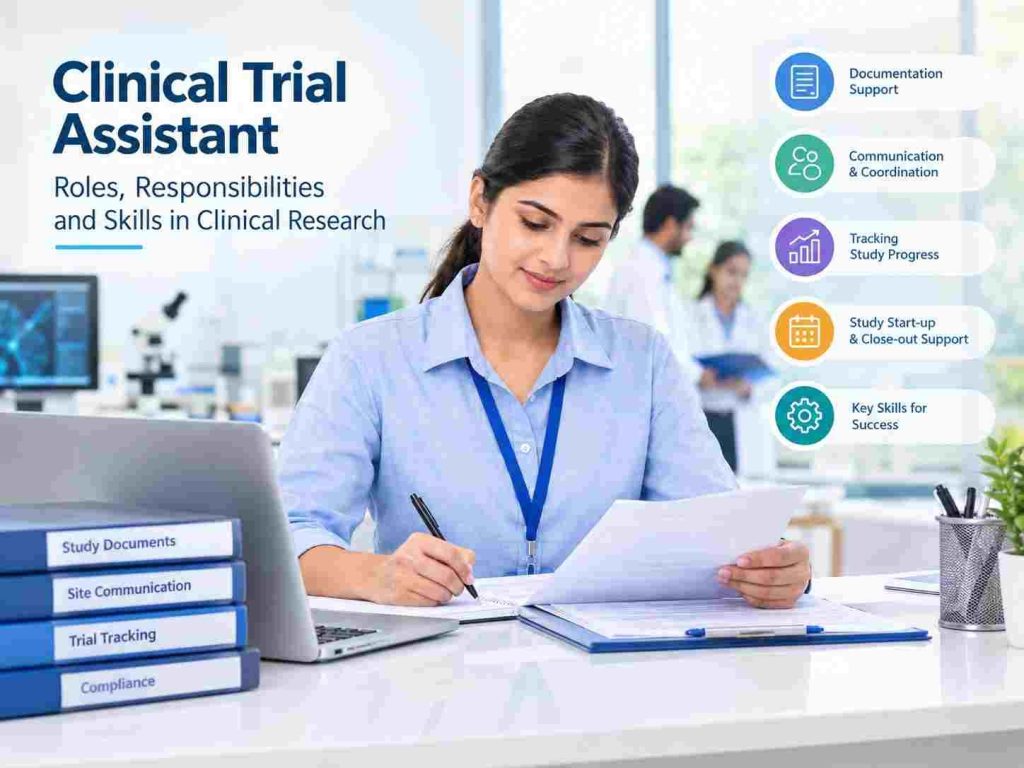
Clinical research is so much more than testing a new medicine or evaluating a healthcare product. Every study needs organised documentation; coordinated communication; accurate recordkeeping; careful tracking of activities. A clinical trial assistant does these things so clinical research teams can run studies better.
In India pharmaceutical companies, biotechnology organisations, hospitals and contract research organisations (CROs) all need coordinated clinical research processes to develop medicines and other healthcare products. Knowing what the clinical trial assistant does helps organisations identify operational support needed to keep studies organised, documented and compliant with requirements.
What Is a Clinical Trial Assistant?
A clinical trial assistant (CTA) is a clinical research professional who assists clinical trial teams with administrative and operational work. Duties include updating study documents; coordinating communications; updating trackers; helping clinical research staff keep track of study timelines.
CTA’s may work with clinical research associates (CRAs), clinical trial managers, investigators, regulatory specialists and other study personnel. Responsibilities will differ by organization and study but generally the position involves documentation coordination and trial administration rather than independent medical decision making or determining study outcomes.
Key responsibilities of a clinical trial assistant
Responsibilities for the clinical trial assistant will vary according to study complexity, organisation and stage of research but generally (a) The following tasks are common to most studies.
1. Clinical Trial Documentation
Documentation is needed throughout a clinical study. A CTA can organize documents needed; file systems with missing records; update study documentation according to procedures; traceability activities (e.g. filing) prepare teams for quality reviews or inspections; etc.
2. Study Coordination & Communication
Clinical trials have stakeholders (sometimes several sites). A clinical trial assistant can schedule meetings, circulate information, action-item lists and follow up on tasks pending; communication tells teams what is outstanding and how to deal with administrative delays before they impact study timelines.
3. Tracking study progress
CTAs can update study trackers, record project status and monitor status of documentation (training activities), site requirements etc.; depending on organisation they may also use clinical trial management systems (CTMS) or electronic document management platforms. Records tell project teams what happened and what needs to be done next.
4. Study start-up and close-out support
Clinical trial assistants can help with activities at different parts of a study — during start up they might organize documents, track training completion and coordinate distribution of approved study materials; close out they may follow up on outstanding documents, organize records and assist with administrative completion activities under the direction of the study team.
Essential Skills for a Clinical Trial Assistant
Successful clinical trial support requires organizational ability, communication skills and knowledge of regulated research environments
- Attention to detail Checks documents, records accurate information finds missing information
- Time management Multi-tasking to meet study deadlines
- Communication skills Coordination among research teams, sites and others
- Computer proficiency Spreadsheet DMS (document management systems) relevant clinical research software
- Understanding of GCP Familiarity with applicable ethical and quality standards helps professionals understand why procedures and documentation matter
- Problem solving Identifies administrative gaps Escalates issues to appropriate members of team
- Confidentiality Because clinical research documentation may contain participant sensitive information proprietary study data confidentiality is just as important
Clinical Trial Assistant vs Clinical Research Associate
Although these roles work closely together, their primary responsibilities differ.
Clinical Trial Assistant | Clinical Research Associate |
Supports study administration and coordination | Performs clinical site monitoring according to assigned responsibilities |
Organizes documents and tracks pending activities | Reviews trial conduct and relevant records at research sites |
Maintains trackers and assists with study systems | Identifies and follows up on monitoring findings |
Provides operational support to the research team | Helps assess whether the study is being conducted according to the protocol and applicable requirements |
The exact division of responsibilities varies between sponsors and CROs. Both roles contribute to the overall coordination and quality of clinical research.
Why Clinical Trial Support Matters for Pharmaceutical Companies in India
Clinical research by pharma and biotech companies is planned between scientific planning, study documentation, regulatory requirements & operational activities. Administrative gaps can lead to submission delays (missing records or extra work for clinical teams).
Trial support helps workflows stay organized, reminds people what work is outstanding and stores important documentation where it needs to be. But the quality of a study is also determined by its scientific design (e.g., what questions will be asked?), qualified personnel, participant safety measures and oversight (how will they be done?).
Companies need to state responsibilities clearly and ensure that clinical trial activities are performed by appropriately qualified personnel in accordance with applicable regulations and study procedures.
How CROs Support Clinical Research Activities
A contract research organisation can provide specialised research and development services to pharmaceutical, nutraceutical, biotechnology and healthcare businesses — depending on the project it could be preclinical studies; analytical testing; product development; regulatory documentation or scientific writing etc.
If an organization is planning research in India then working with the right CRO can clarify project requirements and identify expertise needed at different stages of development.
The support required will be specific to that product, research objectives, development stage and regulatory pathway applicable to that product.
Discuss Your Research Requirements with FrontroPharma
FrontroPharma offers contract research organization services (product development, preclinical studies, analytical techniques, regulatory filing and scientific/regulatory writing) to organizations working in pharmaceutical, nutraceutical, AYUSH and other product development areas.
If your organization is planning a research project or needs help with research documentation, analytical evaluation, preclinical studies or regulatory requirements contact FrontroPharma to discuss what you need.

